

Cable tray cost is formed by section mass, material, thickness, process route, finish, fitting count, order quantity, packing and required evidence. This pre-quote guide shows how to normalise those inputs before comparing offers, while the related guide

Price a complete route scope, not a tray name copied from a drawing.
Cable Tray Cost Drivers: What Changes the Price Before You Request a Quote
-
Home>
-
Blog>
-
Technology>
Cable Tray Cost Drivers: Material, Coating and Quantity
14
2026.11
Quote before rate
A cable tray quotation starts making sense when every offer describes the same metal, route, fitting kit, finish and delivery scope. A lower rate attached to a different bundle is not a cheaper tray.
Most cost arguments begin with a number copied from two different quotations. One supplier prices an indoor straight run in pre-galvanized steel. Another prices the same drawing with hot-dip galvanizing, extra reducers, loose cover clamps and batch records. The totals may look different for a dozen reasons before either supplier reaches margin.
This guide follows the order the factory has to price: section and material, forming and finishing route, fitting take-off, order quantity, packing, inspection and documentation. Use it before the RFQ leaves your desk, then read Comparing Cable Tray Quotes after the offers come back.
drawing revisionstrip massprocess routefinishfitting countpackingrecords
Six inputs turn a tray description into a quotation
A cable tray is rarely a single finished line item. The quotation has to cover the straight sections, fittings, supports or fixing hardware purchased with them, the surface route, the packing plan and the records requested for acceptance. The buyer sees a total. The factory sees a stack of operations and purchased inputs that must be sequenced.
The strongest first move is to separate technical scope from commercial terms. Technical scope fixes what must be manufactured and tested. Commercial terms decide how the order is packed, shipped, paid for and documented. When those two layers are mixed into one sentence such as “600 mm galvanized tray, best price”, the reply may be fast but it cannot be reliable.
1. Section and massWidth, side height, thickness, material and section length determine the starting metal demand.
2. Process routeCutting, punching or perforation, forming, welding where used, handling and first-piece approval follow the drawing.
3. Surface routeEG, HDG, ZAM or powder coating changes preparation, handling and cut-edge treatment.
4. Route kitElbows, tees, reducers, covers, splices, dividers and supports belong in the same take-off.
5. Order shapeBatch quantity, repeatability and the published 300 kg MOQ affect setup and material planning.
6. Delivery evidencePacking, marking, inspection records and destination requirements close the quote.
Indoor EG renovation
Mixed existing widths and field dimensions can add reducers and custom bends. Put the measured schedule, finish repair expectation and exact fitting count into the RFQ before comparing the straight-section rate.
Outdoor HDG line
The HDG route changes handling and cut-edge planning. Confirm the requested zinc thickness, whether field cuts need a repair method, and whether every bracket shares the same exposure class.
Coastal stainless route
The grade family and mixed-metal contact decide the support and fixing package. A stainless tray with an untreated carbon-steel accessory creates a different service route from the one implied by the tray price.
Repeat OEM batch
Repeat geometry reduces re-planning, but only when the approved drawing, code, finish, packing and inspection record stay fixed. Ask how the factory controls a revision before the second order is released.
The scenarios are planning examples rather than quotations. Their purpose is to show why a buyer should not stop at the product family name. The same phrase, “600 mm cable tray”, can describe different thicknesses, materials, finish classes, fittings and evidence packages.
Material and thickness decide how much metal the order really needs
The quoted tray is not priced by width alone. Its starting material demand follows the section mass, which changes with side height, sheet thickness, steel or aluminium grade, and the forming pattern. Two sections with the same nominal width can therefore carry different weight and process cost.
HULK Metal accepts customised widths from 50 to 1200 mm, heights from 10 to 200 mm and thicknesses from 0.5 to 3.0 mm. The catalogue identifies Q mild steel, A aluminium, S4 stainless 304 and S6 stainless 316. For a wider finish comparison, read Pre-galvanized, HDG, ZAM, Stainless or Aluminum. Those codes and finish classes are a better RFQ starting point than a photograph because they can be checked against the drawing and the quoted item.
- Write the material code, not only “steel” or “stainless”.
- Write width and height as separate dimensions.
- Keep the drawing revision beside the take-off.
A practical check is to ask both suppliers for the same schedule and the same unit basis. If one price is per metre, another is per section and a third excludes couplers, the headline numbers cannot be compared. Ask for a bill of materials with code, material, width, height, thickness, length, quantity and finish beside every item.
Mass follows the section
Changing thickness or height changes the metal demand even when the plan view stays the same. The quotation should identify which revision produced the take-off.
Material follows the exposure
Mild steel, aluminium and stainless families require different handling and accessory compatibility. Do not leave the grade to the lowest bidder.
| Decision | What it changes | RFQ evidence |
|---|---|---|
| Material code | Forming route, finish compatibility, fixing choice and expected maintenance approach. | Q, A, S4 or S6 stated on every line. |
| Thickness | Starting mass and the handling needed during cutting, forming and packing. | Nominal thickness with the governing tolerance. |
| Section height | Geometry, support relationship and available cable space. | Width and side height written as separate dimensions. |
| Standard or drawing | Tooling, first-piece inspection and the amount of repeat planning. | Revision-controlled drawing or catalogue code. |
HULK Metal publishes +/-0.05 mm incoming raw-material tolerance and +/-2 mm finished product tolerance. Those figures belong to different stages. Applying the raw-material band to a finished section makes a correctly produced tray look out of specification. The RFQ and inspection plan should name the stage being checked.
Check the mass basis before accepting a per-metre rate
A quotation can be arithmetically correct and still be difficult to audit. If the supplier states only a rate and a total length, the buyer cannot see whether the price includes a heavier side height, a thicker strip, a different section pattern or a longer standard section. The missing evidence sits inside the rate, where it is hard to challenge later.
Ask for a code-by-code mass basis and reconcile it with the route schedule. The checker does not need to reproduce the factory calculation. It only needs to show that every width, height, thickness, material and length in the drawing appears once in the quotation, and that no line has been averaged into a different profile.
- Match every quoted code to the drawing.
- Check that quantities use a consistent unit.
- Record any provisional mass assumption in the quote itself.
The same discipline applies to accessories. Cover plates, dividers, couplers and brackets can be measured by piece, pair, metre or set. A mixed unit schedule forces the buyer to convert every line before comparison. Standardise the unit in the RFQ: section by piece and length, cover by piece, divider by length, joints by set and supports by piece.
| Record | What to reconcile | Common omission |
|---|---|---|
| Section code | Width, side height, material and thickness. | A generic family name replaces the item code. |
| Length schedule | Section length and quantity for every route segment. | A total metre figure mixes several profiles. |
| Mass line | Quoted mass or metal demand for the exact code. | The buyer multiplies a rough density assumption instead. |
| Finish scope | Coated item and required class for each line. | Straight sections and fittings receive different finishes. |
| Accessory basis | Piece, pair, set, metre or area. | Two offers use different units for the same kit. |
If a final drawing is not ready, mark the mass basis as provisional. A provisional quote can still help budgeting, but it should not be treated as a fixed price for the completed route. The buyer can ask which input would have the largest effect if the route changes: width, side height, thickness, fitting count or finish class.
The finish route adds preparation, handling and repair rules
Surface treatment is not a colour swatch added after the tray is made. The chosen route changes preparation, handling between operations, edge protection, inspection and the repair instruction that travels with the delivery. The same section geometry can therefore follow several commercial routes.
The catalogue lists pre-galvanized EG at 40, 80 or 275 g/m2, hot-dip galvanizing at 45, 65 or 85 um, ZAM coating and powder coating. Those are specification classes, not guarantees that one finish fits every site. The buyer still has to define the atmosphere, cleaning method, abrasion risk and accepted touch-up approach.
Cut edges need particular attention. Punching, cutting and drilling expose fresh substrate. A finish that protects the flat face but leaves the hole edge without a repair plan creates a future maintenance item. Ask how the selected route treats cut areas and what compatible repair material is supplied or approved.
Pre-galvanized EG
The catalogue offers 40, 80 and 275 g/m2 options. The exact class, cut-edge treatment and indoor exposure assumption must be written into the RFQ rather than inferred from a generic “galvanized” description.
Hot-dip galvanized
HDG options are 45, 65 and 85 um zinc-layer thickness. Preparation and handling differ from EG, so compare the requested class and any touch-up requirement, not only the finish name.
ZAM coating
ZAM is a separate coating route in the catalogue. It belongs beside the exposure condition and the repair method; it should not be treated as an interchangeable label for either EG or HDG.
Powder coating
Powder coating carries colour and surface-protection requirements that must be specified. If the route also needs a galvanized base, state that sequence so the supplier quotes the complete process path.
Commercial trap: “same colour” is not the same finish route. A powder-coated surface, an EG section and an HDG section can look similar on a screen while carrying different preparation, edge protection and repair requirements.
Geometry and fittings are where a simple take-off starts to drift
Straight tray metres are easy to count. The cost error usually appears at the nodes: bends, tees, crosses, reducers, expansion or splice details, supports, dividers, cover clamps and end closures. Each item has its own drawing, coupling pattern and finish route.
A route with ten short offsets may contain more unique fittings than a much longer straight run. The buying schedule should therefore separate standard sections from custom or direction-changing items. A single total-metre figure hides that difference and makes two offers look comparable when their kits are not.
Step 1: freeze the route
Mark the drawing revision and list every node before requesting a rate.
Step 2: allocate interfaces
Name the supplier of couplers, fasteners, supports, covers and continuity parts at each joint.
Support spacing is also part of the technical basis. Catalogue load charts follow DIN EN IEC 61537. The support layout, cable load, span and fitting continuity need to be resolved together with the tray selection. The field sequence is covered in Cable Tray Installation, while the fitting-load relationship is set out in Cable Ladder Fittings Must Match the Straight-section Load Class. A cheaper section that forces a denser support package may not be cheaper as an installed route.
Count the nodes
List every elbow, tee, cross, reducer, end closure and level change before asking for a rate.
Count the interfaces
Each joint needs the right coupler, fasteners and continuity detail. A tray without its matching kit is an incomplete quote.
Count the supports
The support interval follows load and span. Do not let one supplier price the tray while another has to solve the support route later.
A useful take-off summary has four totals: straight section length, fitting count by type, support or fixing count by type, and finish area or coated item count. The quotation should reconcile to those four totals.
Quantity changes more than the multiplication factor
HULK Metal publishes a minimum order quantity of not less than 300 kg. That number is a clear order gate, but the buyer still has to ask how a mixed schedule is accumulated and which items are included. A multi-width accessory order and a single straight-section order can use the same minimum policy while requiring different planning.
At the lower end, the quote must carry setup, material purchasing, first-piece review, finish planning, packing and administration across a smaller mass. As the order grows, those fixed activities are distributed across more delivered parts. That is a cost mechanism, not a promise of a specific discount. Only the live quotation can state the actual commercial effect.
- Ask whether the MOQ is assessed on net tray mass or the mixed order.
- List repeat items and unique items separately.
- Confirm which accessories are included in the quantity basis.
Repeat orders deserve their own review. The second batch avoids some engineering work only when the approved revision, catalogue code, material, finish, packing and inspection criteria have not changed. A buyer should ask which record defines the repeat order and who approves a change before production.
Sample or first lot
Use the first lot to prove code interpretation, joint fit, finish appearance, packing and the requested record. It is the point to catch misunderstandings while the specification is still easy to change.
Project batch
A project batch combines several width, fitting and finish lines. Ask for a line-by-line bill of materials so the total order can be reconciled to the route drawing.
Repeat batch
The repeat price should identify the approved baseline. If any drawing, finish or packing item changes, the supplier needs to quote it as a controlled revision rather than assume the old price still applies.
Before RFQFreeze drawing revision and the material / finish schedule.
At quotationReconcile the bill of materials, fitting kit, 300 kg minimum and packing scope.
Before releaseApprove the first-piece plan, packing list and records the buyer will check.
A low tray rate can create cost outside the tray line
Field cost often comes from the gaps between supplied items. A reducer that arrives in the wrong orientation, a cover clamp omitted from the purchase order, or a finish that cannot be repaired after a site cut turns a small line-item difference into extra labour and a second shipment.
The factory can control only the requirements written into the order. That makes the RFQ a cost-control document. It should identify the owner of the interface at every joint and transition: who supplies the coupler, the fasteners, the separator, the cover clamp and the bonding connection.
- Wrong orientation usually starts with an unresolved route drawing.
- Missing hardware usually starts with an incomplete purchase-order boundary.
- Coating disputes usually start with an unspecified repair route.
Acceptance evidence matters for the same reason. HULK Metal's inspection sequence covers incoming material verification, production inspection and finished product checks. The inspection department uses equipment including spectrometers, a CMM, coating thickness gauges and salt-spray chambers. The RFQ should say which records must accompany the delivery, rather than asking for “quality certificate” as a catch-all phrase.
Scope failure
The tray is priced, but one fitting family or fixing package is excluded. The site discovers the gap after the route is laid out.
Evidence failure
The hardware is complete, but the buyer cannot match the delivered batch to the dimensions and finish stated in the order.
The practical test is to ask what happens if one route node changes after the initial quote. If a bend moves, the buyer may need a different fitting, two adjacent sections may change length, and the support count may move with them. A supplier who can show those connected lines is pricing the route rather than selling a generic metre.
How to normalise two cable tray quotes
Start with the same route revision for both suppliers. Then compare four blocks: technical schedule, surface schedule, fitting and support kit, and delivery evidence. A quote that cannot be mapped to those blocks is not ready for a price decision.
| Check | What both quotes must state | Why it changes the decision |
|---|---|---|
| Drawing baseline | Same revision date and route take-off. | Prevents pricing two different designs. |
| Bill of materials | Code, material, width, height, thickness, length and quantity per line. | Makes mass and item scope traceable. |
| Finish class | EG grade, HDG thickness, ZAM or powder-coating sequence. | Prevents a generic finish name from hiding a different route. |
| Fitting kit | Every bend, branch, reducer, support, fastener and cover clamp. | Moves the comparison from straight metres to the complete route. |
| Quantity basis | Mixed-item treatment against the 300 kg MOQ. | Explains what the quoted batch actually contains. |
| Packing and records | Bundle marking, packing scope, inspection records and documents. | Prevents delivery work being left outside both offers. |
Once the sheets align, compare rate by like item rather than by grand total alone. A supplier may be cheaper on straight sections and more expensive on custom fittings. That is a legitimate result. The mistake is approving the total before the buyer knows which route caused it.
- Normalise the drawing revision.
- Normalise the bill of materials and units.
- Normalise finish, packing and evidence before comparing the total.
1 routeOne drawing revision for both offers.
4 blocksTechnical, finish, fittings, delivery evidence.
0 assumptionsUnknown quantities remain visibly unknown.
The RFQ package that supports a usable cost model
Send the drawing, the cable route schedule and the commercial requirements together. The most useful RFQ does not ask for a single “best price”. It asks for a structured price against a controlled scope, with exclusions and lead-time assumptions stated.
0 of 8 checked
For a project with several widths, attach a section matrix rather than a prose description. For a retrofit, state which dimensions are field-measured and which can be normalised in production. For a coastal route, include the exact stainless grade and the support or fastener materials that will touch the tray.
- Use a matrix for repeated widths and lengths.
- Mark field-measured dimensions in a retrofit schedule.
- Name the finish repair method where the route may be altered on site.
The completed package gives the factory enough information to quote the real process route and gives the buyer a basis for checking the reply. If one line is unknown, mark it unknown instead of allowing each supplier to fill the gap with a different assumption.
Cable tray cost and quotation questions
Why can two quotes for the same tray width be far apart?
The width is only one dimension. Thickness, height, material, finish class, section length, fitting count, support kit, quantity and required records can all differ. Two offers may also use different section lengths, include different couplers, assign a different party to the cover clamps, or price a different inspection package. A useful comparison starts with one drawing revision and one bill of materials, then checks the unit and boundary of every line. If either offer averages several profiles into one metre rate, ask for the underlying schedule before treating the total as evidence of a price difference.
Does the 300 kg MOQ apply to one item or the whole order?
HULK Metal publishes a minimum order quantity of not less than 300 kg. Confirm the mixed-item rule in the actual quotation.
Should I ask for a price per metre?
Only after the item code and unit basis are fixed.
Which finish should I put in the RFQ?
State the exposure and the required catalogue class. For EG, identify 40, 80 or 275 g/m2; for HDG, identify 45, 65 or 85 um; for ZAM or powder coating, state the route and repair expectation. Do not send only a colour image, because a visual sample cannot show preparation, coating class or cut-edge treatment. If the route will be cut or drilled on site, ask for the approved touch-up method and the material that will be supplied with the order. That answer belongs in the finish line of the quotation, not in a separate installation conversation after delivery.
Do fittings need to come from the same supplier?
The route is easier to verify when the tray, fittings and interface hardware use one dimension and finish baseline. If another supplier provides part of the kit, list that owner explicitly and check the mating dimensions and coating compatibility.
How does support spacing affect the quotation?
The tray load basis and support layout are related. Catalogue load charts follow DIN EN IEC 61537, but the project must still confirm the cable load and installed configuration. A change from a heavier to a lighter section can reduce the tray line and increase the support count at the same time. For that reason, price the tray and supports against the same span and load case. If the structural engineer has not fixed the support layout, mark it as provisional and ask which assumption has the largest effect on the order.
What drawings and records should travel with a repeat order?
Use the approved baseline.
Can HULK Metal quote from dimensions before the final drawing is ready?
HULK Metal accepts customised drawings and can review the available scope, but a final quotation against an incomplete route will rest on assumptions. Mark provisional dimensions and fitting quantities so the supplier can show which parts of the price are still open. Ask for the provisional inputs to be listed beside the quote, so the buyer knows which value must be replaced after the site measure. A quick budget can be useful at this stage; it should not be released as a fixed purchase order until the unknown route nodes and finish decisions are closed.
Build the quote from one controlled scope
Send the route revision, section matrix, material and finish codes, fitting list, quantity pattern and required records. HULK Metal can then confirm the manufacturing scope and return questions against the same take-off.
HULK Metal
Cable tray systems built around one take-off
HULK Metal supplies perforated tray, cable ladder, cable trunking and wire mesh systems with the fittings, supports and covers that belong to each route. For a comparable quotation, send the section schedule, material and finish codes, fitting list, quantity and required records so the factory prices one controlled scope against the same drawing revision.
-
 Cable Ladder Cover Plate Fit, Joints and Service Access
Plan cover plates from measured rail seats, joint direction, clamp access and the route maintenance method. This page owns installation and retrofit fit.
READ MORE
-
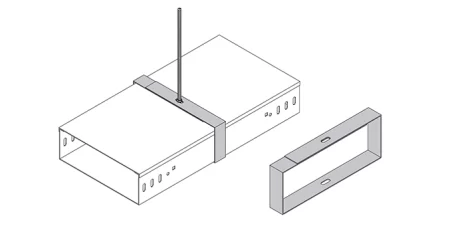
Cable Ladder Cover Plates for Mechanical Protection and Dust Control
Specify a cable ladder cover by side-rail fit, panel edge, joint, clamp profile, material, finish and route conditions. The page separates dust and impact protection from any claim of a sealed enclosure.
READ MORE
-
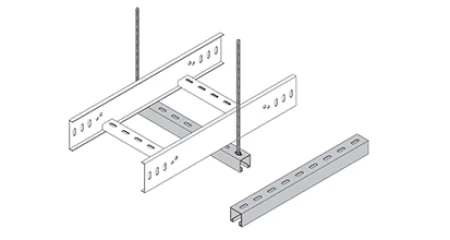
Cable Tray Support Systems: C-Channel Brackets, Hangers and Ceiling Supports
Select cable tray support systems by fixing surface, route geometry and load path, then coordinate bracket, channel, rod, fastener and finish before RFQ.
READ MORE
-
45 Degree Perforated Cable Tray Elbow for Gradual Horizontal Turns
A 45HE perforated tray elbow for shallow horizontal deviations, with catalogue A/B data, four material families, four finishes and drawing-based customisation.
READ MORE
-
ZAM Coated Perforated Cable Tray for Coastal and Marine Cable Routes
Zinc-aluminum-magnesium coated P1 perforated tray for coastal and marine routes, with ventilated support, compatible fittings, cut-edge inspection and project-specific load confirmation.
READ MORE
-
Aluminum Perforated Cable Tray for Lightweight Ventilated Routing
Aluminum perforated tray in 6061-T6 or 6063-T5, from 50 to 1200 mm wide, for lighter ventilated cable runs with catalog load data and matched fittings.
READ MORE
-
Stainless Steel Perforated Cable Tray (304/316) for Corrosive and Clean Environments
Choose 304 or 316 stainless perforated cable tray by exposure, then confirm the perforated section, support span, surface condition and complete stainless accessory package.
READ MORE
-
Pre-Galvanized Perforated Cable Tray Straight Sections for Control and Signal Cables
P1-01A pre-galvanized perforated cable tray straight sections support dry indoor control and signal routes, with EG coating classes, flexible dimensions, compatible accessories and documented quality checks.
READ MORE
-
Hot-Dip Galvanized Perforated Cable Tray Straight Sections for Outdoor Runs
Hot-dip galvanized perforated cable tray straight sections combine ventilated cable support, three HULK zinc options and catalog load data for exposed industrial routes.
READ MORE
-
Wire Mesh Cable Tray Y Junction for Angled Branch Routing
HULK Metal configures wire mesh cable tray Y junctions for angled branch routes, matched to tray width, side height, grid, wire, finish and support drawing.
READ MORE
-
Wire Mesh Cable Tray Straight Section
A 3000 mm HM-Q-W-01A welded-wire straight section for engineered cable routes, with standard widths to 600 mm, four materials and documented load and QC guidance.
READ MORE
-
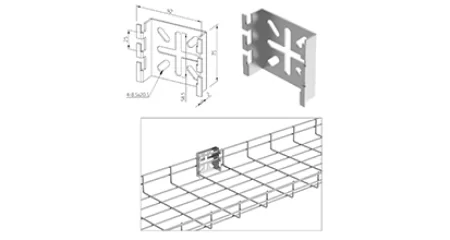
WA-PB Wall Brackets with Upper Snap-Ons for Wire Mesh Cable Tray
A side-wall bracket for wire mesh cable tray, with an 84 mm plate, four arm lengths, two upper snap-ons and a CRP member, matched to 3.5-6 mm wire.
READ MORE
-
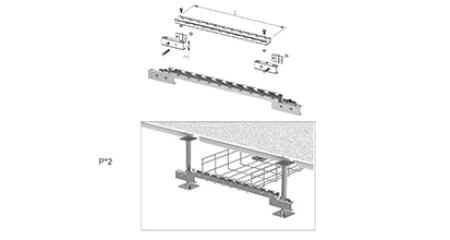
Wire Mesh Cable Tray V Connector for Raised-Floor Support
HULK Metal V Connector positions wire mesh cable tray under a raised floor, engages the pedestal support geometry and keeps the tray clear of removable floor panels.
READ MORE
-
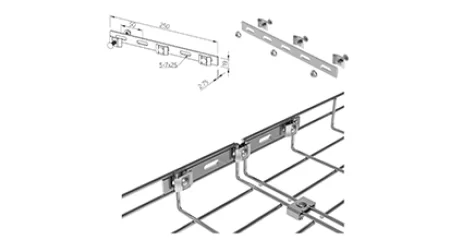
Strengthening Bars for Wire Mesh Cable Tray Straight Joints
WA-STB joins two straight wire mesh tray sections with a 250 mm bar, three KK34-top clips, and matching M6 hardware for a longer clamp footprint.
READ MORE
-
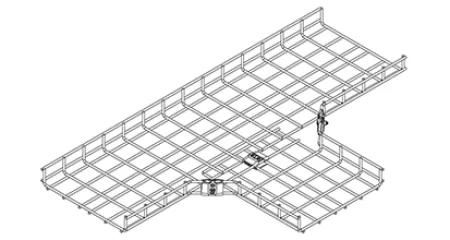
HULK Metal Wire Mesh Cable Tray Standard Tee for Continuous Branch Routing
HULK Metal supplies wire mesh cable tray standard tees in mild steel, aluminium and stainless steel, with EG, HDG, ZAM or powder-coated finishes for project branch routes.
READ MORE
-
Wire Mesh Cable Tray Spider Bracket: Flat Fixing to Wall or Floor
WA-SB-9275 holds a wire mesh cable tray flat against a wall or floor. The formed plate hooks onto 3.5-6.0 mm tray wire and gives four 8.5 x 20.5 mm slots for the anchor bolts.
READ MORE
-
Radian Connector: The Curved Bar Behind a Wire Mesh Tray Bend
The radian connector is the curved bar kit that turns a wire mesh cable tray through a radius and closes T and cross junctions, sized to 50, 100 and 150 mm side heights.
READ MORE
-
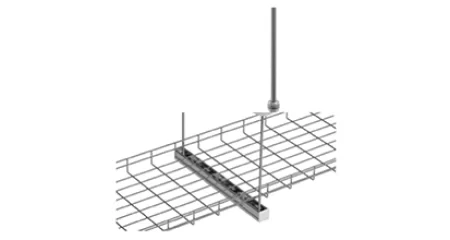
M Shape Bars for Wire Mesh Cable Trays: Ceiling Suspension Sized by Tray Width
An M-section bar that hangs wire mesh cable tray from threaded rods, sized from 200 mm to 700 mm by tray width, with rods and nuts ordered as part of the same set.
READ MORE
-
L-Shaped Wall Brackets for Wire Mesh Cable Trays on Side Walls
One formed L bracket replaces a bracket-and-channel assembly on wall-hugging wire mesh runs. Four arm lengths cover trays from 100 mm to 300 mm wide on a shared 168 mm plate.
READ MORE
-
Hold Down Coupler for Wire Mesh Cable Tray: Wire-Matched Clamping for Risers and Supports
Hold down couplers clamp mesh tray runs at the wires themselves, keeping cables seated on vertical legs and fixing the tray to frames and stands. This page covers the interface, quantities and finishes.
READ MORE
-
Hanging Hook for Wire Mesh Cable Tray: Threaded Rod Suspension, Sized by Rod Diameter
A threaded hook is the rod-to-tray link in a suspended mesh tray run. This page covers rod sizing, the tray interface, anti-rotation locknuts, finishes and ordering checks.
READ MORE
-
Hanging Brackets for Wire Mesh Cable Trays: Ceiling Suspension Sized by Load Path
A hanging bracket joins a mesh tray to the ceiling structure, so it fits the tray wire and the rod above it. Load and spacing decide the part.
READ MORE
-
Fastlock Brackets That Lock Mesh Tray Onto C Channel Without Bolts
Fastlock seats a wire mesh tray on C-channel support framing without bolts at the tray, cutting installation time at the support position, with the channel profile confirmed before the order.
READ MORE
-
Push-In Splicers That Close Mesh Tray Joints Without Bolts
Screwless push-in splicers close straight wire mesh tray joints fast, listed as WA-DB-25025 for 3.5 to 6.0 mm wire, with bolted couplers where the run is wide or heavy.
READ MORE
-
Flush Drop In Anchors for Cable Tray Ceiling Fixing
Flush drop in anchors fix threaded rods and tray hangers into solid concrete ceilings, supplied in bolt-type sizes from D8 to D14 and internal threads from M6 to M12.
READ MORE
-
Cross Clips That Lock 90 Degree Wire Mesh Tray Crossings
Made cross clips fix the wire crossings a welded tray section cannot close, counted per junction and supplied in steel, 304 or 316 with four finish options.
READ MORE
-
One Clamp, Five Fittings: The KK34 Wire Mesh Coupler
Catalogue code WA-CKK34, 34 mm wide and 11 mm high, for wire mesh tray on 4.0 to 6.0 mm wire, and the top half that four bar-type connectors are built from.
READ MORE
-
KK28 Coupler: How Two Clamp Halves Join Wire Mesh Tray Sections
Catalogue code WA-CKK28, 28 mm wide and 11 mm high, for connecting straight wire mesh cable tray sections and making bends on trays from 3.5 to 5.0 mm wire.
READ MORE
-
Corner Strength Bars That Reinforce Wire Mesh Tray Tees and Crosses
Corner strength bars bolt across the cut corners of wire mesh cable tray bends, tees and crosses, adding a rigid steel member and four clips where the tray grid is opened.
READ MORE
-
Cable Guiders That Protect Wire Mesh Tray Drop-Out Points
HULK Metal cable guiders protect wire mesh tray entry and exit points with a formed curve, guarding cable jackets from cut wire ends and controlling the bend radius at every drop-out.
READ MORE
-
C Channel Brackets That Fix Wire Mesh Tray to Support Framing
HULK Metal C channel brackets connect wire mesh cable tray to support framing through a spring nut in the channel slot, with published series, lengths, thicknesses and load charts.
READ MORE
-
C Channel Support Framing for Wire Mesh Cable Tray Runs
HULK Metal C channel builds support frames for wire mesh cable tray in 41x41 and 83x41 profiles, with slotted faces, spring-nut fixing and support spacing taken from the tray load chart.
READ MORE
-
Two-Level Bridge Type Floor Stands for Wire Mesh Cable Tray
HULK Metal two-level bridge type floor stands carry a lower and an upper wire mesh cable tray run on one floor frame, with per-tier seats and drawing-confirmed tier spacing.
READ MORE
-
Bridge Type Floor Stands That Hold Mesh Tray Runs Above the Floor
HULK Metal bridge type floor stands support wire mesh cable tray on a two-post frame and cross beam, with a U-shaped seat, adjustable height and finish matched to the route.
READ MORE
-
Adjustable Connectors That Join Wire Mesh Cable Trays at Field-Measured Angles
HULK Metal adjustable connectors join wire mesh cable tray sections at site-measured angles with hinge, slotted halves and bolt locking, sized and finished to match the run.
READ MORE
-
Floor Stands Sized for 100 mm Wire Mesh Cable Tray
Factory-made 100 floor stands carry 100 mm wide wire mesh cable tray at floor and cabinet level with width-matched seats, hold-down options and batch QC records for bulk orders.
READ MORE
-
90 Degree Internal Riser Fittings for Wire Mesh Cable Tray Systems
Factory-made 90 degree internal riser fittings carry wire mesh cable tray through clean vertical level changes. Continuous welded grid, matched radius and drawing-based sizing protect cable bend limits in every batch.
READ MORE
-
Factory-Made 90 Degree Horizontal Bends for Wire Mesh Cable Tray
90 degree horizontal bends carry wire mesh cable tray through clean plan corners with matched radius and continuous welded grid. Volume supply with drawing-based sizing, matched finishes and batch QC records.
READ MORE
-
Floor Stands That Carry 50 mm Wire Mesh Cable Tray
A 50 mm floor stand raises wire mesh tray above floors and cabinet tops, keeps the run level, and pairs with hold-downs. Bulk supply with drawing-based sizing, finish options and batch QC records.
READ MORE
-
Factory-Made 45 Degree External Riser Fittings for Wire Mesh Cable Tray
45 degree external risers carry wire mesh cable tray through clean vertical level changes with pre-welded edges and protected cable radius. Bulk supply with batch QC records and drawing-based sizing.
READ MORE
-
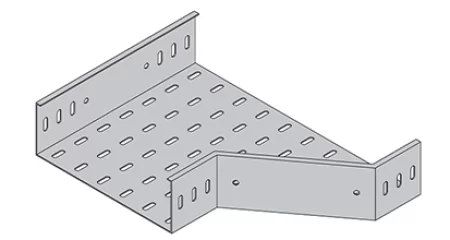
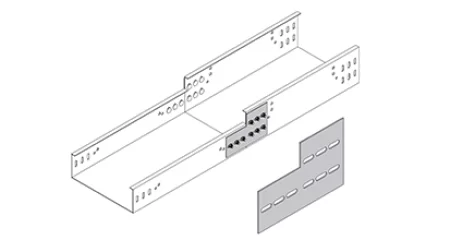
Widening Connector Plates That Join Perforated Cable Trays at Different Heights
HULK Metal WCP connector plates join a perforated cable tray to a second run at a different height, with step sizes from WCP-50-50 to WCP-150-600 and four finish options.
READ MORE
-
Wall Brackets That Mount a Perforated Cable Tray to a Side Wall
HULK Metal WB wall brackets mount a perforated cable tray on a side wall, with arm lengths from WB-100 to WB-700, steel, aluminum and stainless options and EG, HDG, AZM or PC finishes.
READ MORE
-
Vertical Internal Bend Fittings for Perforated Cable Tray Level Changes
HULK Metal 02F vertical internal bends take perforated tray runs through level changes, in four angles, steel or stainless with EG, HDG and ZAM finishes.
READ MORE
-
Vertical External Bend Fittings for Perforated Cable Tray Level Changes
HULK Metal 02E vertical external bends take perforated tray runs through level changes, in four angles, steel or stainless with EG, HDG and ZAM finishes.
READ MORE
-
Under Floor Stand for Ground-Level Cable Tray Support
UFS-series under floor stands carry perforated cable tray bridges at ground level, with L sizes 100 to 500 mm, steel, aluminum and stainless options, four anti-corrosion finishes and a DIN EN IEC 61537 load basis.
READ MORE
-
Vertical Adjust Coupler for Cable Tray Level Changes
VAC-series vertical adjust couplers join perforated cable trays at level changes, sized by side height from 50 to 200 mm, in steel, aluminum and stainless with four finishes.
READ MORE
-
U Bracket Lifting Support Crossbar for Cable Tray
PA-series U brackets serve as lifting support crossbars for perforated cable trays, with L sizes 50 to 500 mm, steel, aluminum and stainless options, four anti-corrosion finishes and a DIN EN IEC 61537 load basis.
READ MORE
-
Tray Carrier for Perforated Cable Tray Joints
TC-series tray carriers join a perforated cable tray from both sides in 50 to 200 mm heights, in steel, aluminum or stainless steel with four anti-corrosion finishes.
READ MORE
-
Threaded Rod for Ceiling Cable Tray Suspension
HULK Metal supplies WA-LS and TR threaded rods for overhead cable tray runs, with catalogue lengths, hanger-pattern guidance and project-specific finish confirmation.
READ MORE
-
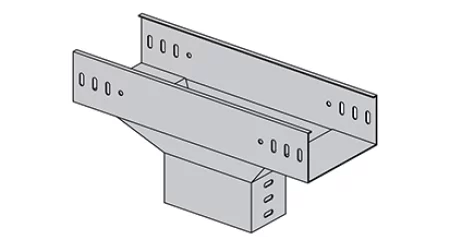
Cable Tray Right Reducer for Width Changes
RR-series right reducers step a perforated cable tray from a wide to a narrow width on the right side of the run, in steel, aluminum or stainless steel with four anti-corrosion finishes.
READ MORE
-
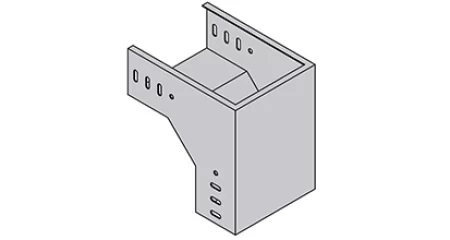
Cable Tray Raise Connection Piece for Height Transitions
RCP-series raise connection pieces carry a perforated cable tray from one side height to another at the end of a run, in steel, aluminum or stainless steel with four anti-corrosion finishes.
READ MORE
-
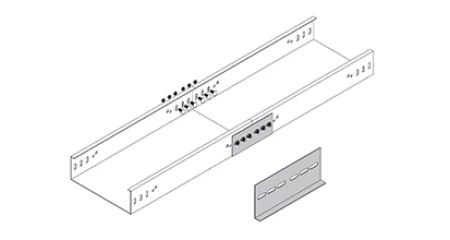
Outside Straight Coupler for Perforated Cable Tray
A join that keeps perforated cable tray runs level, continuous and rated for the same load as the tray, in OSC-50 to OSC-200 heights and four material and finish grades.
READ MORE
-
Middle Reducers That Narrow a Perforated Cable Tray Run Evenly
HULK Metal MR-series middle reducers step a perforated cable tray from a wider run to a narrower one with a centered taper on both sides, in standard and custom sizes with four finishes.
READ MORE
-
Left Reducers That Step Down Perforated Cable Tray Widths
HULK Metal LR-series left reducers step a perforated tray from a wider to a narrower run on one side, in standard and custom sizes with four finishes.
READ MORE
-
Inside Straight Coupler for Perforated Cable Tray
The HULK Metal inside straight coupler connects two perforated cable tray lengths in line, in ISC-50 to ISC-200 heights and the same grade and finish options as the tray.
READ MORE
-
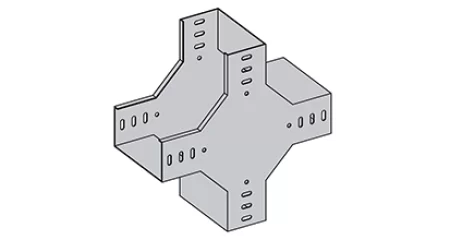
Horizontal Cross Fittings for Perforated Cable Tray Systems
HULK Metal horizontal cross fittings join four perforated cable tray runs at one junction, in widths 50-1200 mm, in Q steel, aluminum or stainless with EG, HDG, AZM or PC finishes.
READ MORE
-
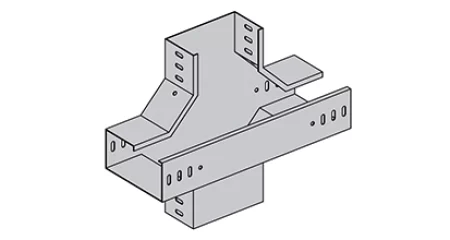
Horizontal Tee Fittings for Perforated Cable Tray Systems
HULK Metal horizontal tee fittings join a branch to a straight perforated cable tray run at one junction, in widths 50-1200 mm, in Q steel, aluminum or stainless with EG, HDG, AZM or PC finishes.
READ MORE
-
Hold Down Brackets That Lock Perforated Cable Trays to Their Supports
HULK Metal hold down brackets HDB-50 to HDB-200 fix perforated cable trays to C Channel 41x41 supports, with custom heights and finishes.
READ MORE
-
90° Horizontal Elbow for Perforated Cable Tray Systems
A 90° horizontal elbow turns a perforated cable tray run through a corner in the same plane while keeping the flange, the hole pattern and the load path continuous.
READ MORE
-
Perforated Cable Tray Dividers for Power, Control and Signal Separation
HULK Metal cable tray dividers separate power, control and signal cables inside perforated trays, in 3 m lengths and custom heights, with four finishes.
READ MORE
-
Cover Clamp 2 for Securing Cable Tray Covers
Cover Clamp 2 (CLP-CC2) secures cable tray cover panels in place, with custom heights and radii available, in the HULK Metal tray accessory range.
READ MORE
-
Cover Clamp 1 for Securing Cable Tray Covers
Cover Clamp 1 (CLP-CC1) secures cable tray cover panels in place, with custom heights and radii available, in the HULK Metal tray accessory range.
READ MORE
-
Ceiling Bracket-A with Vertical Posts for Cable Tray Support
Ceiling Bracket-A (CB A) suspends cable trays under ceilings with vertical posts and crossbar, heights 300-3000 mm, hot-dip galvanized, load tested to DIN EN IEC 61537.
READ MORE
-
Ceiling Bracket with Vertical Posts for Cable Tray Support
Ceiling brackets (CB and CB A) with vertical posts and crossbar suspend cable trays under ceilings, lengths 300-3000 mm, hot-dip galvanized, load tested to DIN EN IEC 61537.
READ MORE
-
C Double Channel 83x41 Bracket for Heavy Cable Tray Support
Hot-dip galvanized C double channel brackets 83x41 (C83) with 14 mm holes, 200-1050 mm projections, for heavy cable tray and ladder support.
READ MORE
-
C Channel Hanging Support 83x41 for Heavy-Duty Cable Tray Suspension
Hot-dip galvanized C channel hanging supports 83x41 (CT83) with slotted surface, 14 mm holes, 500-2500 mm lengths, and safe working loads to 2.90 kN.
READ MORE
-
C Channel Hanging Support 41x41 for Cable Tray Suspension
Hot-dip galvanized C channel hanging supports 41x41 (CT41) with slotted surface, 14 mm holes, 250-2000 mm lengths, and safe working loads to 2.60 kN.
READ MORE
-
C Channel 41x41 Brackets That Carry Tray and Pipe Supports
HULK Metal C41 brackets for 41x41 C channel framing, in 100-900 mm lengths with HDG finish and published safe working loads.
READ MORE
-
C Channel 41x41 for Cable Tray Support Framing
HULK Metal C channel 41x41 framing for cable tray supports, in perforated and solid profiles with PG or HDG finish and spring nut fixing.
READ MORE
-
Cable Tray Bracket Frame for Ceiling Support
HULK Metal bracket frames lift perforated cable trays under ceilings. Five catalog codes cover 50 to 400 mm tray widths, with matched finishes for indoor and outdoor runs.
READ MORE
-
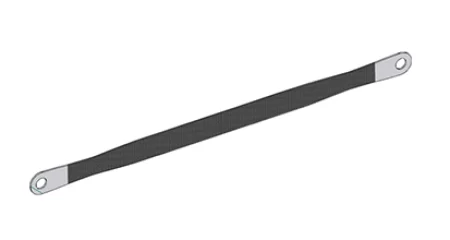
Cable Tray Bonding Jumper for Electrical Continuity
HULK Metal bonding jumper CL-BJ keeps perforated cable tray runs electrically continuous. Bridges coated joints and expansion gaps, with matched finishes for indoor and outdoor runs.
READ MORE
-
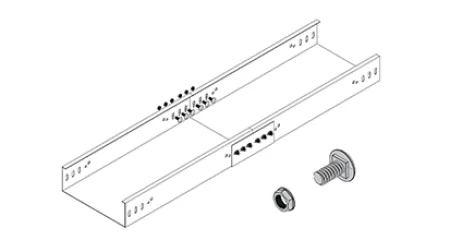
Cable Tray Bolt and Nut for Ceiling Suspension
HULK Metal bolt and nut sets suspend perforated cable trays under ceilings. Four catalog codes cover M6 to M12, with matched finishes for indoor and outdoor runs.
READ MORE
-
45 Degree Horizontal Bend for Wire Mesh Cable Tray
HULK Metal 45 degree horizontal bend is a factory-built wire mesh cable tray fitting matched to the straight section by width, height, and surface code for clean direction changes.
READ MORE
-
Straight Perforated Cable Trays Built for Ventilation and Load
HULK Metal straight perforated cable trays run 50-1200 mm wide with six folding edge types, four material codes, and four anti-corrosion finishes.
READ MORE
-
Perforated Cable Tray Blind Ends That Close Tray Runs Cleanly
HULK Metal BE-series blind ends close cable tray run ends in widths from 50 to 600 mm, with steel, aluminum, and stainless options and four anti-corrosion finishes.
READ MORE
-
Angle Bar Bracket for Cable Tray Support Systems
Angle bar bracket cable tray supports from HULK Metal carry trays as lifting crossbars in 50-500 mm lengths with custom finishes.
READ MORE
-
Vertical Tee Fitting-B Cable Trunking Fittings for Vertical Branches
Vertical tee fitting-B cable trunking fittings from HULK Metal add a vertical branch to a through run with custom sizes and finishes.
READ MORE
-
Vertical Tee Fitting-A Cable Trunking Fittings for Vertical Branches
Vertical tee fitting-A cable trunking fittings from HULK Metal add a vertical branch to a through run with published A and B dimensions.
READ MORE
-
Vertical Internal Bend Cable Trunking Fittings for Level Changes
Vertical internal bend cable trunking fittings from HULK Metal change run level in 30 to 90 degree steps with custom radius and finishes.
READ MORE
-
Vertical External Bend Cable Trunking Fittings for Level Changes
Vertical external bend cable trunking fittings from HULK Metal change run level in 30 to 90 degree steps with custom radius and finishes.
READ MORE
-
Vertical Cross Fitting-B Cable Trunking Fittings for Four-Way Junctions
Vertical cross fitting-B from HULK Metal joins four cable trunking directions at one junction, custom-built in EG, HDG, ZAM, or powder coating.
READ MORE
-
Vertical Cross Fitting-A Cable Trunking Fittings for Four-Way Junctions
Vertical cross cable trunking fittings from HULK Metal join four trunking directions at one junction, built to your width, height, thickness, and finish.
READ MORE
-
Upward Vertical Turning Elbow Fittings for Rising Trunking Runs
Upward vertical turning elbow fittings from HULK Metal raise a trunking run at a controlled turn in Q steel, aluminum or stainless, with EG, HDG, ZAM and powder-coated finishes.
READ MORE
-
Upper Vertical Tee-B Cable Trunking Fittings for Rising Branches
Upper vertical tee-B fittings from HULK Metal carry a cable branch upward from a trunking run in Q steel, aluminum or stainless, with EG, HDG, ZAM and powder-coated finishes.
READ MORE
-
Upper Vertical Tee-A Cable Trunking Fittings for Rising Branches
Upper vertical tee-A fittings from HULK Metal carry a cable branch upward from a trunking run in Q steel, aluminum or stainless, with EG, HDG, ZAM and powder-coated finishes.
READ MORE
-
Upper Horizontal Cross-B Cable Trunking Fittings for Four-Way Junctions
Upper horizontal cross-B fittings from HULK Metal join four trunking runs at one intersection in Q steel, aluminum or stainless, with EG, HDG, ZAM and powder-coated finishes.
READ MORE
-
Upper Horizontal Cross Cable Trunking Fittings for Four-Way Junctions
Upper horizontal cross fittings from HULK Metal join four trunking runs at one intersection in Q steel, aluminum or stainless, with EG, HDG, ZAM and powder-coated finishes.
READ MORE
-
Slope Turn Cable Trunking Fittings for Inclined Routes
Slope turn fittings from HULK Metal change the gradient of a cable trunking run in Q steel, aluminum or stainless, with EG, HDG, ZAM and powder-coated finishes.
READ MORE
-
Right-Bottom Vertical Tee Fittings for Descending Trunking Branches
Right-bottom vertical tee fittings from HULK Metal send a cable branch down on the right side in Q steel, aluminum or stainless, with EG, HDG, ZAM and powder-coated finishes.
READ MORE
-
Right-Bottom Vertical Elbow Fittings for Descending Trunking Runs
Right-bottom vertical elbow fittings from HULK Metal lower a trunking run on the right side in Q steel, aluminum or stainless, with EG, HDG, ZAM and powder-coated finishes.
READ MORE
-
Right Upper Vertical Tee Fittings for Rising Trunking Runs
Right upper vertical tee fittings from HULK Metal send a cable branch up on the right side, in Q steel, aluminum or stainless with EG, HDG, ZAM and powder-coated finishes.
READ MORE
-
Right Upper Vertical Elbow Fittings for Rising Trunking Runs
Right upper vertical elbow fittings from HULK Metal raise a trunking run on the right side at a controlled turn, in Q steel, aluminum or stainless with EG, HDG, ZAM and powder-coated finishes.
READ MORE
-
Left-Bottom Vertical Tee Fittings for Cable Trunking Drops
Left-bottom vertical tee fittings from HULK Metal turn a trunking run downward on the left side at a controlled 90 degrees, in Q steel, aluminum or stainless with EG, HDG, ZAM and powder-coated finishes.
READ MORE
-
Bell Mouth Fittings for Cable Trunking Entry Points
Bell mouth fittings from HULK Metal flare the end of a cable trunking run over a smooth radius, in Q steel, aluminum or stainless with EG, HDG, ZAM and powder-coated finishes.
READ MORE
-
Bottom Horizontal Cross-b Cable Trunking Fittings
The HULK Metal bottom horizontal cross joins two cable trunking runs at one junction, letting cables continue straight through or drop through the bottom outlet to machines, floor ducts, and panels below.
READ MORE
-
Cable Trunking Right Reducer
The HULK Metal right reducer connects cable trunking sections of different widths while keeping one side of the run flush.
READ MORE
-
Middle Reducer Cable Trunking Fittings
A middle reducer changes the width of a cable trunking run on one level, joining a wider section to a narrower one while keeping the route centered.
READ MORE
-
Left Reducer Cable Trunking Fittings
A left reducer changes the width of a cable trunking run while keeping one edge aligned, so cables stay supported where a wide trunking narrows toward outlets and panels.
READ MORE
-
Horizontal Tee Cable Trunking Fittings
A horizontal tee branches a cable trunking run into three directions on one level, feeding circuits to several destinations from a single line.
READ MORE
-
Horizontal Elbow Cable Trunking Fittings
A horizontal elbow changes the direction of a cable trunking run on one level, turning a route around corners and columns without changing its elevation.
READ MORE
-
Horizontal Cross Cable Trunking Fittings
A horizontal cross joins four cable trunking runs at a single intersection, turning one route into a four-way distribution point without changing elevation.
READ MORE
-
Cable Trunking Systems in HDG, EG, ZAM and PC Finishes
Cable trunking keeps cables enclosed, separated, and protected from dust, impact, and casual contact.
READ MORE
-
Left Reducer Cable Ladder Rack
A left reducer transitions the cable ladder width from a larger section to a smaller one, with the reduction occurring on the left side of the tray.
READ MORE
-
Horizontal Elbow Cable Ladder Rack Fittings
Horizontal elbows route cable ladders around obstacles while maintaining continuous support. HULK Metal offers full OEM services for elbows from 50 mm to 1200 mm widths, in any material and coating combination.
READ MORE
-
Horizontal Tee Cable Ladder Fittings
A horizontal tee isn’t a commodity—it’s a structural junction that reveals how well a manufacturer controls cutting, forming, welding, and coating.
READ MORE
-
Middle Reducer Cable Ladder Rack
A middle reducer connects two straight ladder sections of different widths, maintaining cable support continuity when the tray width must change due to varying cable counts or routing requirements.
READ MORE
-
Right Reducer Cable Ladder Rack
Right reducers appear simple, but poor fabrication leads to misalignment, cable stress, and costly delays. I’ll share factory-floor insights.
READ MORE
-
Vertical External Bend Cable Ladder Fittings
In cable ladder systems, the vertical external bend is one of the most geometrically demanding fittings. It changes direction upward and outward simultaneously.
READ MORE
-
Vertical Internal Bend Cable Ladder Fittings
A vertical internal bend handles the transition where cables must rise or fall within the same vertical plane while staying inside the ladder structure. It is not interchangeable with an external bend.
READ MORE
-
Horizontal Cross in Cable Ladder System
The horizontal cross is a crucial intersection in cable ladder networks, demanding precise geometry and robust construction. Our OEM service extends beyond simple branding: we tailor dimensions, surface finishes, and even rung spacing to your project specs.
READ MORE
-
Straight Cable Ladder Cable Ladder Rack
The straight cable ladder is not just a simple tray section. It's the primary load-bearing element that spans between supports. Its material, dimensions, and manufacturing quality directly determine whether cables are properly supported or whether the entire system sags, corrodes, or fails inspection.
READ MORE
-
Custom Network Server Tray
Discover the ultimate in custom network server tray design and manufacturing. At HULK Metal, we specialize in delivering bespoke solutions that meet every client's unique requirements with precision and reliability.
READ MORE
-
Laser Cutting Metal Parts Factory
We can develop a complete solution based on your server switch rack enclosure cabinets drawings, quantity, delivery time, transportation method and other requirements, allowing you to complete higher quality procurement tasks more easily.
READ MORE
-
Custom Metal Brackets Factory In China
We can select the appropriate process, make molds, and complete the production of metal brackets according to your drawings, materials, tolerances, quantities and other requirements.
READ MORE
-
Sheet Metal Spinning Parts Factory In China
HULK Metal is committed to providing high-quality sheet metal spinning parts OEM services to customers around the world. We have an ISO 9001 certified factory and integrated supply chain.
READ MORE
-
OEM Auto Metal Stamping Parts Factory
Our factory is certified by ISO 9001 and ISO 16949. Our experienced technical team can develop a more complete solution according to the drawings and requirements.
READ MORE
-
Stamped Steel Parts Factory
Stamped steel parts are made of carbon steel, alloy steel, and other plates into workpieces with specific shapes and functions using stamping processes such as blanking, bending, bulging, spinning, shrinking, flanging, etc.
READ MORE
-
Metal Stamping Parts Factory
HULK Metal is an ISO 9001 certified metal stamping factory that can provide you with high-quality OEM stamping services such as blanking, bending, drawing, forming, spinning, etc.
READ MORE



More Results
One process chain from material to shipment
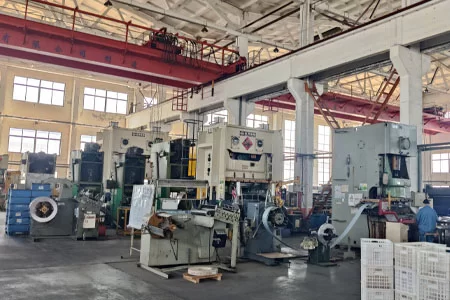
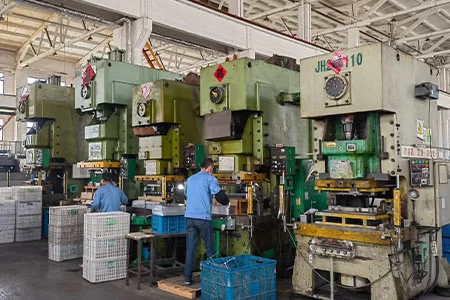
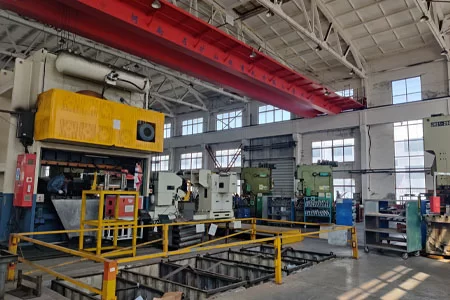
The ISO 9001 factory controls incoming material, cutting, punching, forming, welding, surface treatment, inspection, packing and loading. Raw material evidence, first-piece review, finished dimensions, coating checks and batch records support the price line that the buyer compares against the drawing and approved scope.


-
![Choose a Chinese OEM for Server Rack Trays]()
March 25, 2025
Choose a Chinese OEM for Server Rack Trays
READ MORE
-
![Metal Stamping OEM Factory in China]()
March 25, 2025
Metal Stamping OEM Factory in China
READ MORE
-
![HULK Metal Stamping Factory Show]()
November 21, 2024
HULK Metal Stamping Factory Show
READ MORE
-
![HULK Metal Fabrication]()
October 18, 2024
HULK Metal Fabrication
READ MORE
-
![Waterproof Trunking: Where Sealed Cable Routes Actually Leak]()
November 09, 2026
Waterproof Trunking: Where Sealed Cable Routes Actually Leak
READ MORE
-
![Fabrication vs Machining vs Casting: A Metal Part Decision Guide]()
November 07, 2026
Fabrication vs Machining vs Casting: A Metal Part Decision Guide
READ MORE
-
![Automotive Sheet Metal Fabrication: Grades, Coatings and Tolerances]()
November 06, 2026
Automotive Sheet Metal Fabrication: Grades, Coatings and Tolerances
READ MORE
-
![Sheet Metal Ductwork Design: Sizing, Seams and Airflow]()
October 24, 2026
Sheet Metal Ductwork Design: Sizing, Seams and Airflow
READ MORE
-
![Powder Coating vs Plating for Sheet Metal Parts: Fit, Corrosion and Current Path]()
October 22, 2026
Powder Coating vs Plating for Sheet Metal Parts: Fit, Corrosion and Current Path
READ MORE
-
![CNC Machining Stamped Parts: When the Press Is Not the Last Operation]()
October 21, 2026
CNC Machining Stamped Parts: When the Press Is Not the Last Operation
READ MORE
-
![Cable Tray Reducer Types: Concentric, Eccentric and Offset]()
October 21, 2026
Cable Tray Reducer Types: Concentric, Eccentric and Offset
READ MORE
-
![Cable Tray Load Tables: Read Span, Load and Deflection Before Approval]()
October 21, 2026
Cable Tray Load Tables: Read Span, Load and Deflection Before Approval
READ MORE
-
![Cable Tray Vertical Bend Guide: Metal Bending for Inside and Outside Risers]()
October 20, 2026
Cable Tray Vertical Bend Guide: Metal Bending for Inside and Outside Risers
READ MORE
-
![Tee vs Cross Fittings: When Cable Paths Branch]()
October 20, 2026
Tee vs Cross Fittings: When Cable Paths Branch
READ MORE
-
![Strut Channel Load Ratings: Match Profile, Axis and Fittings to the Support]()
October 19, 2026
Strut Channel Load Ratings: Match Profile, Axis and Fittings to the Support
READ MORE
-
![Fasteners vs Welding in Sheet Metal Assembly]()
October 19, 2026
Fasteners vs Welding in Sheet Metal Assembly
READ MORE
-
![Cable Tray Manufacturing: Six Control Points Between the Coil and the Container]()
October 16, 2026
Cable Tray Manufacturing: Six Control Points Between the Coil and the Container
READ MORE
-
![Metal Stamping Material Yield: Coil Width, Strip Layout and the Scrap You Pay For]()
October 16, 2026
Metal Stamping Material Yield: Coil Width, Strip Layout and the Scrap You Pay For
READ MORE
-
![How to Choose a Stamping Die: Matching the Tooling to Part Geometry and Volume]()
October 15, 2026
How to Choose a Stamping Die: Matching the Tooling to Part Geometry and Volume
READ MORE
-
![Cable Raceway vs Cable Tray: What US Buyers Mean and How to Specify]()
October 15, 2026
Cable Raceway vs Cable Tray: What US Buyers Mean and How to Specify
READ MORE
-
![Cable Tray Load Capacity: Working Out the Load Before You Choose the Span]()
October 13, 2026
Cable Tray Load Capacity: Working Out the Load Before You Choose the Span
READ MORE
-
![Metal Stamping Defects: From Symptom to Station to Fix]()
October 13, 2026
Metal Stamping Defects: From Symptom to Station to Fix
READ MORE
-
![Data Center Cable Tray Design - Segregation, Cooling and Access]()
October 12, 2026
Data Center Cable Tray Design - Segregation, Cooling and Access
READ MORE
-
![Powder Coating vs Galvanizing for Cable Trays: Where Each Finish Fails and How to Repair It]()
October 10, 2026
Powder Coating vs Galvanizing for Cable Trays: Where Each Finish Fails and How to Repair It
READ MORE
-
![OEM Sheet Metal Fabrication: From RFQ to Volume Production]()
October 10, 2026
OEM Sheet Metal Fabrication: From RFQ to Volume Production
READ MORE
-
![What Size Cable Trunking Do You Need? Fill, Heat, Radius and Spare Capacity]()
October 09, 2026
What Size Cable Trunking Do You Need? Fill, Heat, Radius and Spare Capacity
READ MORE
-
![Fabrication QC Checklist: Dimensions, Weld and Finish]()
October 09, 2026
Fabrication QC Checklist: Dimensions, Weld and Finish
READ MORE
-
![Cable Ladder Incoming Inspection: The 7 Checks Buyers Keep Missing]()
October 08, 2026
Cable Ladder Incoming Inspection: The 7 Checks Buyers Keep Missing
READ MORE
-
![Sheet Metal Bending Defects: Causes, Fixes and the Pre-Shipment Checks]()
October 08, 2026
Sheet Metal Bending Defects: Causes, Fixes and the Pre-Shipment Checks
READ MORE
-
![Wire Mesh Cable Tray Installation - Cutting, Bending and Support On Site]()
October 08, 2026
Wire Mesh Cable Tray Installation - Cutting, Bending and Support On Site
READ MORE
-
![Cable Trunking Fittings: How a Run Turns, Branches and Steps Down]()
October 08, 2026
Cable Trunking Fittings: How a Run Turns, Branches and Steps Down
READ MORE
-
![MIG vs TIG vs Laser Welding for Sheet Metal]()
September 30, 2026
MIG vs TIG vs Laser Welding for Sheet Metal
READ MORE
-
![Tray, Conduit or Trunking: A Selection Guide]()
September 30, 2026
Tray, Conduit or Trunking: A Selection Guide
READ MORE
-
![Where Cables Enter and Leave a Cable Ladder System: Transitions, Bend Radius and Edge Protection]()
September 30, 2026
Where Cables Enter and Leave a Cable Ladder System: Transitions, Bend Radius and Edge Protection
READ MORE
-
![Bending Sheet Metal: Radii, Springback and Tooling]()
September 29, 2026
Bending Sheet Metal: Radii, Springback and Tooling
READ MORE
-
![Wire Mesh vs Solid Tray: Strength, Cost and Access]()
September 29, 2026
Wire Mesh vs Solid Tray: Strength, Cost and Access
READ MORE
-
![Cable Trunking vs Cable Tray: Protection and Access]()
September 28, 2026
Cable Trunking vs Cable Tray: Protection and Access
READ MORE
-
![Designing Sheet Metal Enclosures: Ventilation, Sealing and EMC]()
September 27, 2026
Designing Sheet Metal Enclosures: Ventilation, Sealing and EMC
READ MORE
-
![How to Control Bend Allowance and K-Factor - A Shop-Floor Method for Sheet Metal Flat Patterns]()
September 27, 2026
How to Control Bend Allowance and K-Factor - A Shop-Floor Method for Sheet Metal Flat Patterns
READ MORE
-
![How to Spec Sheet Metal Fabrication: Materials, Tolerances, Finishes]()
September 27, 2026
How to Spec Sheet Metal Fabrication: Materials, Tolerances, Finishes
READ MORE
-
![All 49 Cable Ladder Sizes, Their Published Load and Their Unit Weight]()
September 22, 2026
All 49 Cable Ladder Sizes, Their Published Load and Their Unit Weight
READ MORE
-
![Curved or Routine? Choosing the Right Cable Ladder Elbow for the Route]()
September 21, 2026
Curved or Routine? Choosing the Right Cable Ladder Elbow for the Route
READ MORE
-
![Cable Tray Fill Calculation: From a Cable Schedule to Width, Depth and Spare Capacity]()
September 14, 2026
Cable Tray Fill Calculation: From a Cable Schedule to Width, Depth and Spare Capacity
READ MORE
-
![Connecting New Tray to an Existing Run: Angles, Reducers and Tolerances]()
September 11, 2026
Connecting New Tray to an Existing Run: Angles, Reducers and Tolerances
READ MORE
-
![Cable Ladder Fittings Must Match the Straight-Section Load Class]()
September 11, 2026
Cable Ladder Fittings Must Match the Straight-Section Load Class
READ MORE
-
![Cable Tray Splice Plates, Couplers and Expansion Joints Explained]()
September 11, 2026
Cable Tray Splice Plates, Couplers and Expansion Joints Explained
READ MORE
-
![Cable Tray Support Spacing and Bracket Selection: A Field Guide]()
September 11, 2026
Cable Tray Support Spacing and Bracket Selection: A Field Guide
READ MORE
-
![Which Cable Tray Type Wins by Industry: A 2026 Selection Matrix for Data Halls, Solar Farms and Process Plants]()
September 10, 2026
Which Cable Tray Type Wins by Industry: A 2026 Selection Matrix for Data Halls, Solar Farms and Process Plants
READ MORE
-
![Comparing Cable Tray Quotes: The Five Data Points That Make Prices Comparable]()
September 07, 2026
Comparing Cable Tray Quotes: The Five Data Points That Make Prices Comparable
READ MORE
-
![Cable Ladder Systems for Heavy Industrial Runs: How to Spec Side Rails, Rungs and Load Ratings]()
September 05, 2026
Cable Ladder Systems for Heavy Industrial Runs: How to Spec Side Rails, Rungs and Load Ratings
READ MORE
-
![Pre-Galvanized, HDG, ZAM, Stainless or Aluminum: How to Buy Cable Tray Material That Matches the Site]()
September 05, 2026
Pre-Galvanized, HDG, ZAM, Stainless or Aluminum: How to Buy Cable Tray Material That Matches the Site
READ MORE
-
![Perforated vs Ladder vs Solid Cable Tray: When Each Fits Your Project]()
September 04, 2026
Perforated vs Ladder vs Solid Cable Tray: When Each Fits Your Project
READ MORE
-
![Cable Tray Installation: A Field Guide to Supports, Spacing and Bonding]()
August 19, 2026
Cable Tray Installation: A Field Guide to Supports, Spacing and Bonding
READ MORE
-
![2026 Cable Tray Trends: Renewables and Data Halls Reshape the Specification]()
August 18, 2026
2026 Cable Tray Trends: Renewables and Data Halls Reshape the Specification
READ MORE
-
![Metal Deep Drawing: A Comprehensive Guide]()
March 24, 2025
Metal Deep Drawing: A Comprehensive Guide
READ MORE
-
![Comprehensive Guide to Sheet Metal Bending]()
March 21, 2025
Comprehensive Guide to Sheet Metal Bending
READ MORE
-
![Sheet Metal Spinning]()
March 21, 2025
Sheet Metal Spinning
READ MORE
-
![A Suitable OEM Factory for Your Network Server Blank Panels]()
February 28, 2025
A Suitable OEM Factory for Your Network Server Blank Panels
READ MORE
-
![Common Network Server Accessories: A Complete Guide]()
February 28, 2025
Common Network Server Accessories: A Complete Guide
READ MORE
-
![A Comprehensive Guide to Network Server Racks]()
February 26, 2025
A Comprehensive Guide to Network Server Racks
READ MORE
-
![Superior Network Server Cable Management Solutions by HULK Metal]()
February 24, 2025
Superior Network Server Cable Management Solutions by HULK Metal
READ MORE
-
![Choose a Suitable OEM Factory to Produce Your Network Server Racks]()
February 21, 2025
Choose a Suitable OEM Factory to Produce Your Network Server Racks
READ MORE
-
![How Should You Choose A Suitable OEM Factory to Produce Your Network Server Accessories]()
February 21, 2025
How Should You Choose A Suitable OEM Factory to Produce Your Network Server Accessories
READ MORE
-
![Comprehensive Guide to Sheet Metal Spinning]()
December 04, 2024
Comprehensive Guide to Sheet Metal Spinning
READ MORE
-
![Introduction to Sheet Metal Forming: Processes, Materials, and Choosing the Right Partner]()
October 29, 2024
Introduction to Sheet Metal Forming: Processes, Materials, and Choosing the Right Partner
READ MORE
-
![Comprehensive Guide to Sheet Metal Cutting: Methods, Materials, and Choosing the Right Partner]()
October 25, 2024
Comprehensive Guide to Sheet Metal Cutting: Methods, Materials, and Choosing the Right Partner
READ MORE
-
![Comprehensive Guide to Sheet Metal Blanking]()
October 24, 2024
Comprehensive Guide to Sheet Metal Blanking
READ MORE
-
![Comprehensive Understanding of Sheet Metal Welding]()
September 30, 2024
Comprehensive Understanding of Sheet Metal Welding
READ MORE
-
![8 Types of Sheet Metal Assembly Technology and Their Processes and Applications]()
September 27, 2024
8 Types of Sheet Metal Assembly Technology and Their Processes and Applications
READ MORE
-
![The Most Comprehensive Introduction To Metal Stamping Dies]()
September 24, 2024
The Most Comprehensive Introduction To Metal Stamping Dies
READ MORE
-
![Introduction to Metal Stamping Processes]()
September 19, 2024
Introduction to Metal Stamping Processes
READ MORE










Previous article: None
Next article: Waterproof Trunking: Where Sealed Cable Routes Actually Leak
More cable tray sourcing and engineering guides
leave a message