Search Content
To Supply More Sheet Metal Fabrication Service

To Supply More Sheet Metal Fabrication Service

Advanced Sheet Metal Welding Center

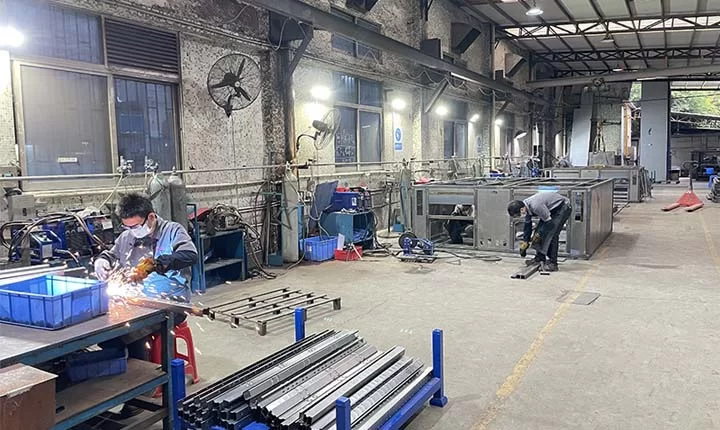
HULK Metal has advanced arc welding, laser welding, gas welding, resistance welding, and other welding equipment. Experienced welders can complete welding with higher quality requirements. The quality inspection center can complete a full range of welding

  • Introduction
  • Equipment
  • Moments
  • Processes
  • Parts
  • Benefits
  • Articles
  • Top
HULK METAL Sheet Metal Welding Center

Sheet metal welding factory scope: HULK Metal is an ISO 9001 certified sheet metal fabrication factory. This welding center routes MIG, TIG, spot, arc and laser welding from the drawing, material, joint access, fixture, finish and inspection requirement. Any required weld class, qualification or NDT scope is project-specific and must be confirmed in the quotation.

We usually choose the more appropriate one from fusion welding, pressure welding, and brazing based on the material, structure, assembly method, and welding performance requirements of the sheet metal parts to complete the welding of the parts and the overall assembly. We will choose strict random inspection methods and develop a complete quality inspection process. The welding qualification rate can reach 99.9%. We welcome every customer to visit the factory and see our welding process and quality inspection process with their own eyes. We also support online factory tours. You can visit the production site from your office. In addition to welding, our supply chain can also provide services such as cutting, stamping, surface treatment, packaging, and transportation.

With such a complete service, wouldn’t you think that the price would be very high? Others, it is not. Do not believe? Contact us at Kindly to get prices that will surprise you.
HULK METAL Welding Equipment

In this section, we present the equipment of our welding center. One of the reasons we can provide quality sheet metal welding services is because of this advanced equipment. You can contact us to visit the factory on-site or online. We will give you a detailed introduction and plan a more suitable solution and quotation based on your requirements.

  • 01
    Argon Arc Welding Machine

    We use it to complete single-sided and double-sided forming welding of 6~10mm thin sheet metal parts and thick plates.

    Argon Arc Welding Machine
  • 02
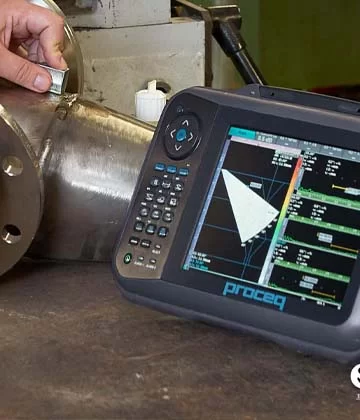
    Digital Ultrasonic Testing Device

    Complete the inspection of internal pores, cracks, and other defects in the weld and promptly discover unqualified welding parts.

    Digital Ultrasonic Testing Device
  • 03
    Resistance Welding Machine

    It can weld sheet metal parts made of carbon steel, stainless steel, aluminum, and other materials. Experienced welding masters can use it to weld high-quality parts.

    Resistance Welding Machine
  • 04
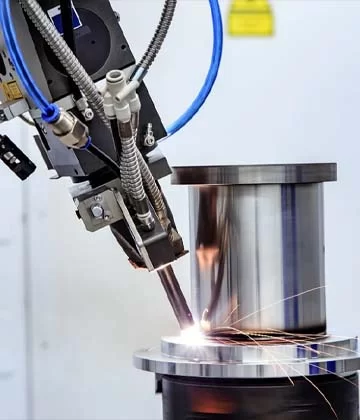
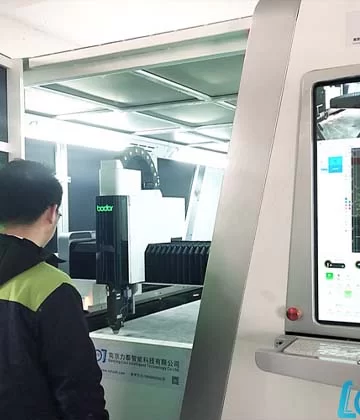
    Laser Welding Machine

    We will use it to complete some sheet metal welding parts that require higher welding accuracy, appearance, and performance.

    Laser Welding Machine

How Is HULK Metal’s Welding Service Carried Out?

Welding is one of the most important processes in sheet metal manufacturing. It welds cut and stamped semi-finished products together to form a complete stamped part or a component of another product. You can find out more about our services here. Kindly contact us for service details.

  • Choose Suitable Welding Process
    PART 01
    Choose Suitable Welding Process

    When we receive your drawings and samples, we will choose a more suitable one from many welding processes based on material, plate thickness, welding performance, appearance requirements, etc.

  • Sheet Metal Parts Cutting & Stamping
    PART 02
    Sheet Metal Parts Cutting & Stamping

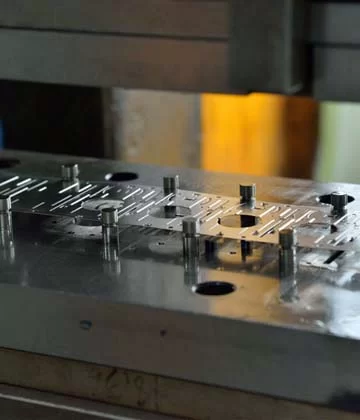
    After the order starts production, we will first use a laser cutting machine to complete the pre-cutting of the plate. And then use stamping to complete the deformation of the sheet metal as needed.

  • Welding
    PART 03
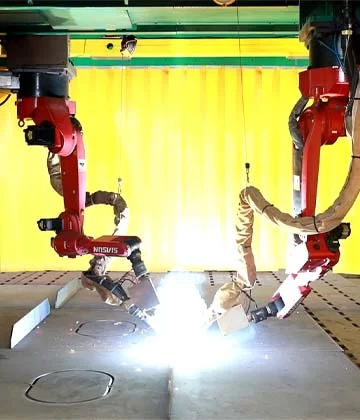
    Welding

    Welding of small batches and small sheet metal parts usually involves spot welding, laser welding, or argon arc welding. Submerged arc welding can be used for welding large and thick sheet metal parts. Choosing the right welding process can save a lot of costs.
  • Quality Control
    PART 04
    Quality Control

    The quality control center will detect the structure, defects, mechanical properties of the welds, and other inspections required from you. We will issue a comprehensive inspection report.

  • Machining
    PART 05
    Machining

    The appearance of the weld is further processed using mechanical processing.

  • Surface Treatment
    PART 06
    Surface Treatment

    We can provide electrophoresis, powder coating, galvanizing, passivation, and other surface treatment services. Aluminum sheet metal parts can be anodized. Stainless steel sheet metal parts can be polished or brushed.
  • Packaging
    PART 07
    Packaging

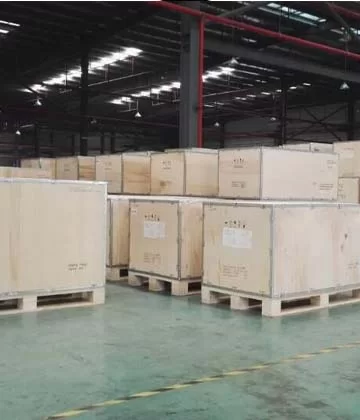
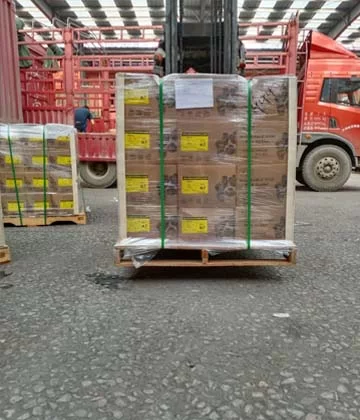
    We have close-knit packaging factories that can provide higher-quality paper, wooden boxes, as well as anti-collision filling.

  • Delivery
    PART 08
    Delivery

    Our warehousing center can realize flexible connections from factory to factory, factory to warehouse, and warehouse to freight port. The freight consulting team can also help you find a more suitable freight company.

  • After Service
    PART 09
    After Service

    We provide complete after-sales service. We will give you a satisfactory solution if there are quality problems with the goods.
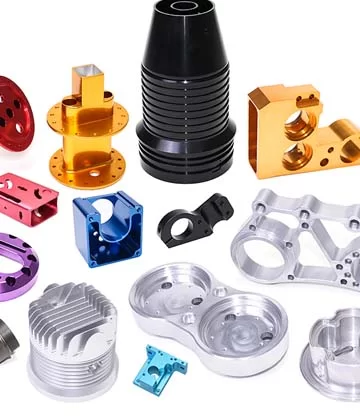
Sheet Metal Parts HULK Metal Have Welded

We have produced sheet metal parts for more than 20 industries, including automobile exterior decoration, trailer manufacturing, construction hardware, fitness equipment manufacturing, etc. We will develop a more suitable solution and a price that satisfies you based on your drawings and requirements.

More Results

CHOOSE HULK METAL WELDING YOU WILL GET

Many customers think our prices are higher before placing an order. After working together, they chose to place more orders with us. It may be the following four points that make them trust us more and more.

  • Get Higher Quality Sheet Metal Parts

    We can produce higher quality sheet metal parts. Our quality control center will develop a complete testing plan based on your requirements. CMM, tensile tester, impact testing machine, hardness tester, ultrasonic flaw detector, and other testing instruments can complete the testing of various properties of sheet metal parts. We will inspect the raw materials, semi-finished products, and finished products of each batch of orders and issue a comprehensive quality inspection report. Higher-quality sheet metal may become one of your key selling points.

  • Get Goods Faster

    Technical staff will develop more appropriate solutions and shorten the order delivery time as much as possible by arranging production links reasonably. Experienced workers can skillfully operate and maintain cutting, stamping, and welding equipment. Orders can be produced efficiently and with high quality. The logistics team can achieve efficient transportation from factory to factory, factory to warehouse, and warehouse to destination port. The Freight Consultation Center can help you find a more suitable freight company. The perfect process allows us to get the order into your hands as quickly as possible.

  • Spend Less Money

    Many customers save a lot of costs by using our supply chain. The biggest role of a complete supply chain is that it can save costs from all links through unified coordination. As the number of orders increases, the supply chain can operate efficiently for a long time. Your order can save more costs in terms of raw materials, molds, production, packaging, logistics, labor, time, etc.

  • Spend Less Time & Energy

    We will help you save the most valuable time and energy through services that match the supply chain. We have established a service team, including raw material procurement, technology, production, quality inspection, packaging, and other personnel. They will be coordinated by the sales manager who is in contact with you to help you solve any problems. You can also keep track of the status of your order through our real-time feedback service.

logo2

HULK Metal routes MIG, TIG, spot, arc and laser welding from the part material, joint design, thickness, access, finish and inspection requirement. The approved drawing remains the controlling document: a process name alone does not define weld quality, distortion allowance or acceptance.

ISO 9001 certified factoryManagement-system certification confirmed in the company fact sheet.
Five confirmed welding processesMIG, TIG, spot, arc and laser welding are listed as fabrication capabilities.
Drawing-led inspectionIncoming material, in-process work and finished parts are checked against the approved plan.

Choose the welding route from the joint, not from the process name

A welding quotation becomes comparable only when the process is linked to the actual part condition. Two assemblies made from the same gauge can need different equipment when one has open access and the other closes into a box, or when one is welded before painting and the other is machined after welding. This is also where welding differs from the broader What Is Sheet Metal Fabrication Services? workflow: the joining method has to follow the drawing, not the shop-floor default.

ProcessTypical planning fitWhat the drawing and RFQ must defineInspection focusPin
MIG / GMAWContinuous wire-feed welding for production joints where the part allows stable access and repeatable fit-up.Material, thickness, joint type, weld size or symbol, fixture access, finish allowance.Bead position, leg or throat requirement, spatter, undercut, distortion.
TIG / GTAWControlled arc with separate filler where edge access, cleanliness and visible weld appearance govern the route.Joint preparation, filler specification, cleaning method, heat input limit, appearance requirement.Fusion, contamination, discoloration, edge burn, finish allowance.
Spot weldingOverlapping sheet or lap-joint assemblies where electrode access and weld placement can be fixed by drawing or fixture.Weld pitch, nugget location, electrode access, material stack, surface condition.Weld location, spacing, indent, surface condition and assembly strength requirement.
Arc weldingA manual route for thicker welded sheet-metal work where drawing and process review call for it.Joint preparation, electrode or filler, sequence, distortion allowance, acceptance class.Penetration requirement, slag or spatter, undercut, dimensional movement.
Laser weldingPrecision joints where tight fit-up and controlled heat input support clean appearance and reduced post-weld work.Gap tolerance, joint access, material reflectivity and condition, clamping, weld geometry.Joint alignment, porosity, incomplete fusion, heat marks, post-weld dimensions.
Boundary: process suitability is not a blanket statement. Material grade, joint configuration, tooling access and inspection class still need drawing review. Welder qualification, WPS/PQR scope and any required NDT are confirmed for the inquiry rather than assumed from the ISO 9001 certificate.

Six inputs that make a welding quotation repeatable

A fast quotation can still become the more expensive production route when the process inputs are incomplete. A supplier needs enough information to decide how the part will be held, welded in sequence, measured and finished. The following inputs let two suppliers quote the same job instead of two different interpretations of it. They also connect this factory step to What Is The Manufacturing Process.

01

Finished geometry and datum chain

Send the final dimensions, tolerances and the datum that survives cutting, forming, welding and any post-weld machining. A welded assembly can look correct on a fixture yet miss the drawing if the finished datum is not stated.

02

Material, condition and thickness

State the grade, thickness, coating and incoming surface condition. Aluminum, carbon steel and stainless steel do not share the same cleaning or heat-input assumptions, and a coated blank changes when edge or weld-zone repair is allowed.

03

Joint type and access

Show whether the joint is butt, lap, tee, corner or an edge closure, and whether the torch or electrode can reach both sides. Joint access affects fixture design, process choice and whether a weld can be inspected after assembly.

04

Fixture and weld sequence

For multiple joints, define the order and whether the part needs a fixture, tack plan or balanced sequence. A stable sequence matters when later machining, holes or mating faces depend on the welded datum.

05

Finish and post-weld allowance

Confirm whether the assembly is machined, ground, powder coated, galvanized, passivated, anodized, polished or brushed after welding. The finish route can change the weld appearance requirement and the amount of material left for cleanup.

06

Acceptance class and evidence

Say whether acceptance is visual, dimensional, NDT, mechanical or a combination. Include the weld class, sample plan and report requirement. “Good weld” is not an acceptance criterion that can be measured consistently.

Common welded-assembly failure points

The following dashboard is an inspection-priority guide, not a measured failure rate. It identifies where drawing ambiguity or process choice most often turns into rework.

High attention

Fit-up gap and mismatch

A gap changes penetration and distortion before welding starts. Check cut quality, forming accuracy, datum alignment and tack position rather than asking the welder to close the gap with heat.

High attention

Heat input and distortion

Long runs, concentrated heat and poor sequence can pull holes, edges and machined faces out of position. Use a welding sequence and fixture plan when geometry must survive after cooling.

Medium attention

Surface contamination

Oil, coating, oxide or abrasive residue can create porosity and poor fusion. Cleaning and coating removal must be compatible with the base material and the later surface treatment.

Medium attention

Porosity, undercut or incomplete fusion

A visually neat bead can still contain internal defects. When the duty requires it, define NDT or destructive checks and the acceptance basis instead of relying on appearance alone.

Medium attention

Process and filler mismatch

The same process name does not make every material combination equivalent. Confirm filler compatibility, joint preparation and the allowable cleaning or post-weld treatment on the drawing.

Planning attention

Inspection plan broader than the need

The plan should answer the drawing risk. Dimensional checks, visual checks, ultrasonic testing, hardness or other tests are selected for a reason, with a stated acceptance rule and report format.

A drawing-led route from RFQ to shipment

The existing factory workflow already separates process choice, cutting and stamping, welding, quality control, machining, surface treatment, packaging and delivery. The added control points below show what the buyer should expect to see inside those stages.

  1. Drawing and process review

    Confirm material, thickness, joint type, datum, weld symbol, finish allowance and inspection class. Raise missing information before quotation.

  2. Process and fixture plan

    Select MIG, TIG, spot, arc or laser welding against access and part condition; define the fixture, tack plan and weld sequence where geometry is sensitive.

  3. Incoming material verification

    Check the material record and surface condition before cutting or forming. This is the first stage in the confirmed raw-material → production → finished-product QC route.

  4. Cut, punch, bend or form

    Prepare the blank and formed features that locate the welded assembly. Fit-up begins here, not at the welding table.

  5. Fit-up and tack check

    Verify joint position, gap, alignment and datum before the final weld sequence locks the error into the part.

  6. Weld and controlled cooling

    Follow the approved sequence and cleaning method. Keep the fixture or support plan in place where the drawing requires controlled cooling.

  7. Inspection and correction

    Check visual condition, dimensions and any specified NDT or mechanical requirement. Define who approves rework and what measurement follows.

  8. Post-weld finish and packing

    Machining, coating or passivation follows the approved weld condition. Pack the finished geometry so edges, welds and mating faces are protected in transit.

How the inspection plan matches the equipment

The quality-control center lists spectrometers, coordinate measuring machines, hardness testers, roughness testers, coating thickness gauges, salt-spray chambers, impact testers and metallographic microscopes. The welding-center page also records a digital ultrasonic testing device for checking internal pores and cracks. The equipment supports a drawing-led plan; it does not mean every order automatically receives every test.

Checks that can be included

  • Material identification and incoming condition.
  • Cut, formed and pre-weld dimensions.
  • Joint fit-up, alignment and weld location.
  • Visual weld condition and post-weld dimensions.
  • Coating thickness, hardness or corrosion checks when specified.
  • Ultrasonic or other NDT within the approved scope.

Confirm in the RFQ

  • Weld symbol and acceptance class.
  • Sampling or full inspection requirement.
  • NDT method, extent and timing.
  • Mechanical-test or report format.
  • Critical dimensions and check fixture ownership.
  • Rework and concession approval route.

The generic company tolerance basis is +/-0.05 mm for raw material and +/-2 mm for product size. The welded assembly may need tighter or differently located controls after distortion, so the drawing and the measured post-weld requirement remain governing. When a drawing controls by fit with mating parts, the acceptance method should be stated explicitly rather than inferred from a general tolerance note.

Inputs for a welding RFQ

A complete RFQ lets the factory return a route-specific quotation instead of a price per kilogram that hides the real cost drivers. Send the 2D drawing, 3D model when available, material and thickness, annual or enquiry quantity, joint details, weld symbols, critical dimensions, finish requirement and inspection class. State whether the part is a new build, a repeat order or a transferred tool, because those three cases change the review work.

If the drawing is incomplete, write the open questions into the RFQ. A useful supplier response should identify the process route, fixture assumption, datum and inspection points, not only a unit price. That is the practical difference between buying welding time and buying a controlled fabricated part.

Welding-center FAQ

How do you choose between MIG, TIG, spot, arc and laser welding?

The route starts with material, joint geometry, thickness, access, distortion sensitivity, finish and inspection requirement. HULK Metal lists all five processes; the approved drawing determines which route fits the part, and any qualification or WPS requirement is confirmed in the quotation.

Can you weld thin sheet-metal parts without excessive distortion?

Thin material needs controlled fit-up, heat input and sequence. The exact process, clamping and distortion allowance depend on the grade, thickness and geometry; send the drawing and critical dimensions so the route can be reviewed instead of judged from a generic minimum thickness.

Which drawing and file package supports a quote?

Send a dimensioned drawing or 3D model, material, thickness, quantity, joint requirements, finish, critical dimensions and inspection class.

Is HULK Metal certified for welding?

The factory is ISO 9001 certified. That is a management-system certification and is not presented here as a welding-process certification. Welder qualification, procedure qualification and any customer-specific approval requirement are confirmed against the project specification.

Which non-destructive tests are available?

The welding-center page lists a digital ultrasonic testing device for internal pores and cracks, and the wider QC center lists dimensional, hardness, roughness, coating and metallographic equipment. The drawing or approved inspection plan must also define the applicable NDT method, coverage, timing, acceptance class and report format. Requirements outside that approved scope are reviewed against the part and project specification. Contact us for details.

Can welding be followed by machining and surface treatment?

Yes, post-weld machining and surface treatment are part of the existing factory workflow. The drawing needs to define the finish allowance and which surfaces remain datum or mating surfaces after coating, so the final part still fits the assembly.

What tolerance can be held on the welded assembly?

The company basis is +/-0.05 mm on raw material and +/-2 mm on product size. For a welded assembly, specify the critical dimensions, datum and post-weld inspection method; the drawing requirement governs wherever distortion or mating fit needs a tighter control.

For a broader comparison of joining and forming steps, read What's the Difference Between Welding or review Metal Fabrication Parts for related production routes.

Make the welding RFQ comparableSend the drawing, joint requirement, finish and inspection class with your enquiry. The factory will confirm the route and any qualification scope before production.

Articles of Metal Welding

We have compiled some articles about metal welding so that you can better understand this process. You can also find some particularly interesting content here, such as how to choose a better metal fabricator, tips from welders, etc.

leave a message
Could I Have Your Name?
How Could I Contact You More Convenient?
You can upload parameters or drawings here.
Uploading +
Could you tell me the kind of support you hope to get?